
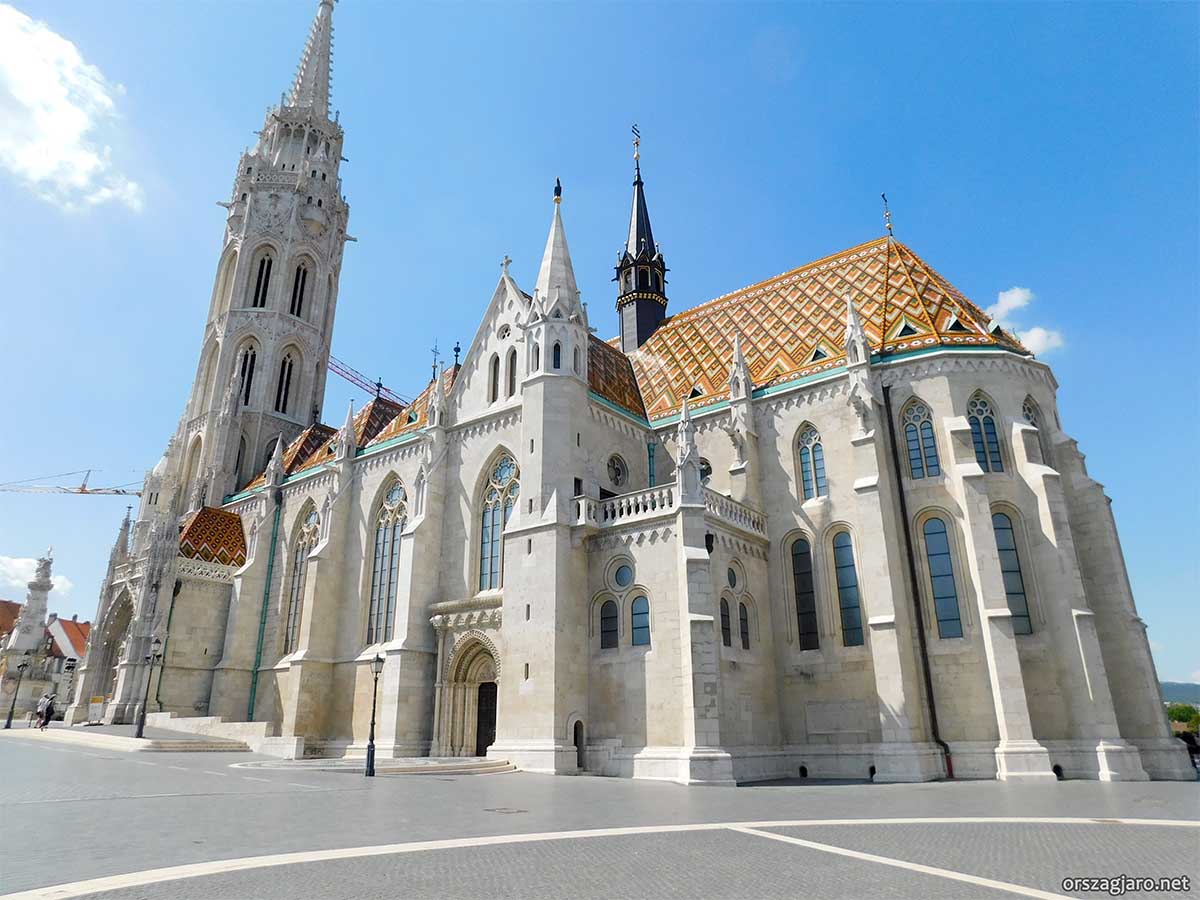
Matthias Church, officially known as the Church of Our Lady of Buda Castle (Budavári Nagyboldogasszony-templom), was built between 1255 and 1269 in Gothic style. The church, founded by King Béla IV, was later rebuilt and expanded during the reigns of King Louis the Great, King Sigismund, and King Matthias.
One of the most popular tourist attractions in Budapest, Matthias Church is located in District I, on Holy Trinity Square, right next to Fisherman’s Bastion in the Buda Castle District.
The church is not only one of Budapest’s most iconic landmarks but also one of the most significant monuments in Hungary. It has hosted numerous royal weddings and three coronations.
The roof of Matthias Church is decorated with nearly 150,000 glazed Zsolnay tiles, dominated by red, yellow, and brown colors. The church has three towers, the most prominent being the 78-meter-high southern bell tower, known as the Matthias Tower, which defines the western façade.
A Brief History of the Church
According to church tradition, the original church was founded by King Saint Stephen in 1015, although no documentary or archaeological evidence has survived. The earliest written sources confirm that the church was built in Gothic style in the 13th century during the reign of Béla IV, following French architectural models.
King Louis the Great rebuilt it into a Gothic hall church. During this time, the southwest Mary Gate was constructed. The vaults of the side aisles were raised to the height of the nave, and large stone-traceried windows were installed in the newly created high wall surfaces.
King Matthias had the southern tower rebuilt, and both of his weddings were held here. In the Middle Ages, kings crowned in Székesfehérvár were presented here to the citizens of Buda. Several rulers also lay in state in the church.
During the first Ottoman occupation of Buda in 1526, much of the medieval roof structure and interior furnishings were destroyed. After the final Ottoman conquest, the church was converted into a mosque. Following the recapture of Buda, it first came into the possession of the Franciscans and later the Jesuits, who rebuilt it in Baroque style and added surrounding auxiliary buildings.
The church gained its present appearance in the 19th century based on the plans of Frigyes Schulek. The interior decoration dates from the late 19th century. The decorative paintings were created by Bertalan Székely, and the stained-glass windows were designed by Székely and Károly Lotz. The main altar is the work of Schulek, featuring a carved wooden Madonna statue at its center. The Ecclesiastical Art Museum operates in the upper gallery.
Post–World War II restoration began in 1954 and continued into the 1970s.
Highlights of Matthias Church
Distinctive features of the church exterior include the Zsolnay-glazed roof tiles, the 78-meter-high Matthias Tower, and the twin-arched Mary Gate adorned with statues.
Hall Interior
The church interior was originally designed in the 13th century as a basilica system, meaning the central nave was higher than the two side aisles.
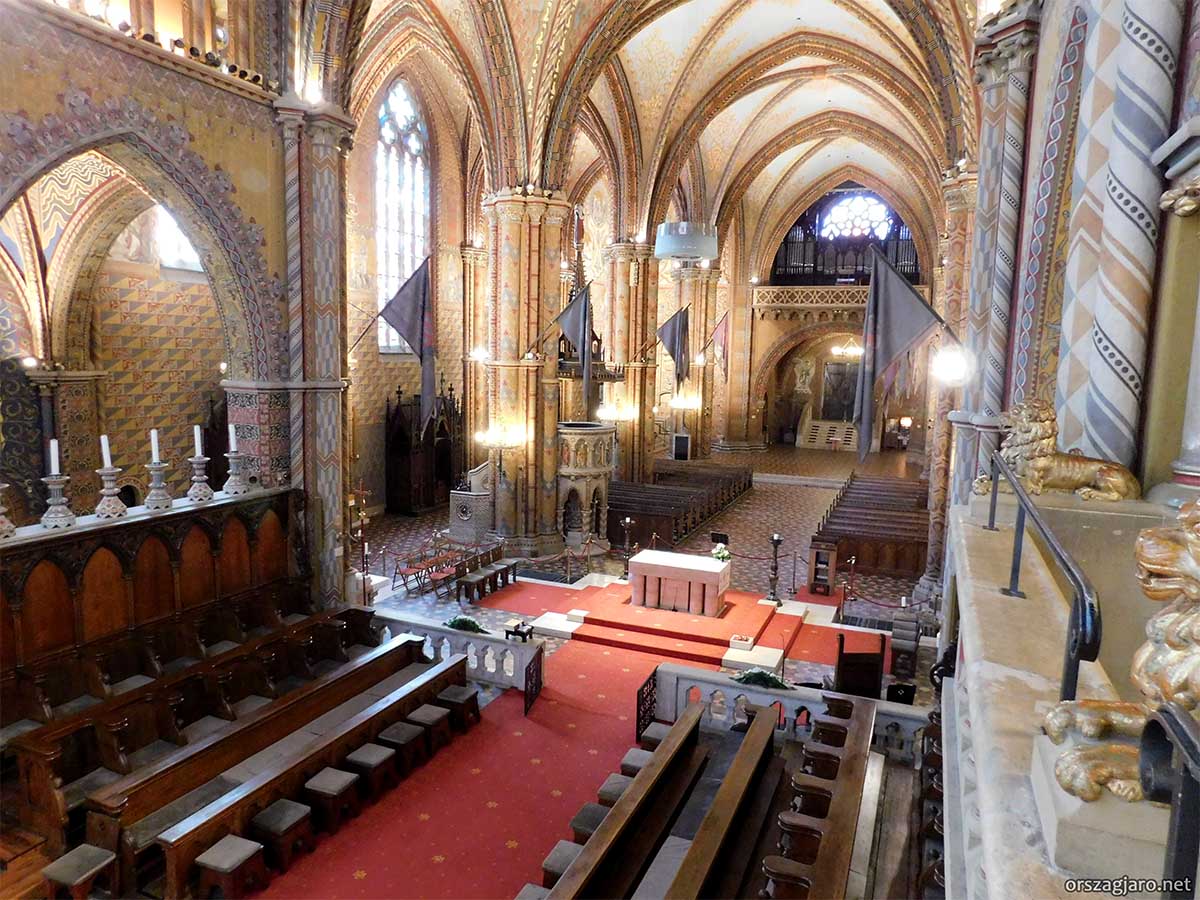
AThe nave received natural light through the clerestory windows above the side aisles. The present hall layout was created in the 14th–15th centuries by raising the side aisles to the height of the nave.
Sanctuary
The elongated, polygonal sanctuary houses the church’s main altar along its central axis. The altar, dedicated to the Virgin Mary, features both Romanesque and Gothic stylistic elements.
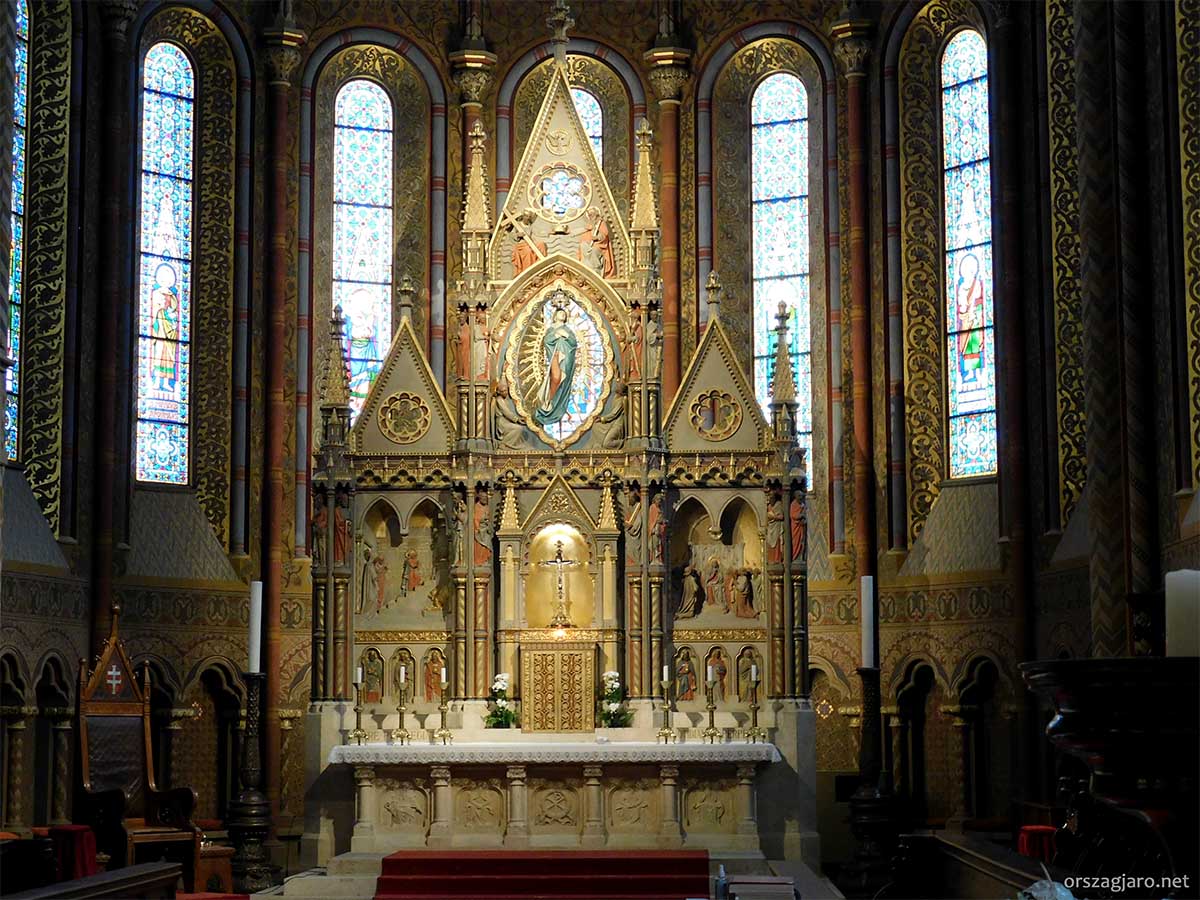
Behind the altar, the sanctuary windows are arranged in two rows, depicting saints and scenes connected to the universal Church and the Hungarian coronation tradition.
Main Altar
The neo-Gothic main altar centers on the figure of the Virgin Mary, with the tabernacle below. On either side of the tabernacle are scenes depicting the Presentation of Mary in the Temple and the Pentecost (Descent of the Holy Spirit).
Chapel of Saint Ladislaus
The walls of the chapel are decorated with paintings by Károly Lotz illustrating scenes from the life and legend of Saint Ladislaus. On the altar stands a copy of the reliquary containing the head relic of the knight-king, originally kept in Győr.
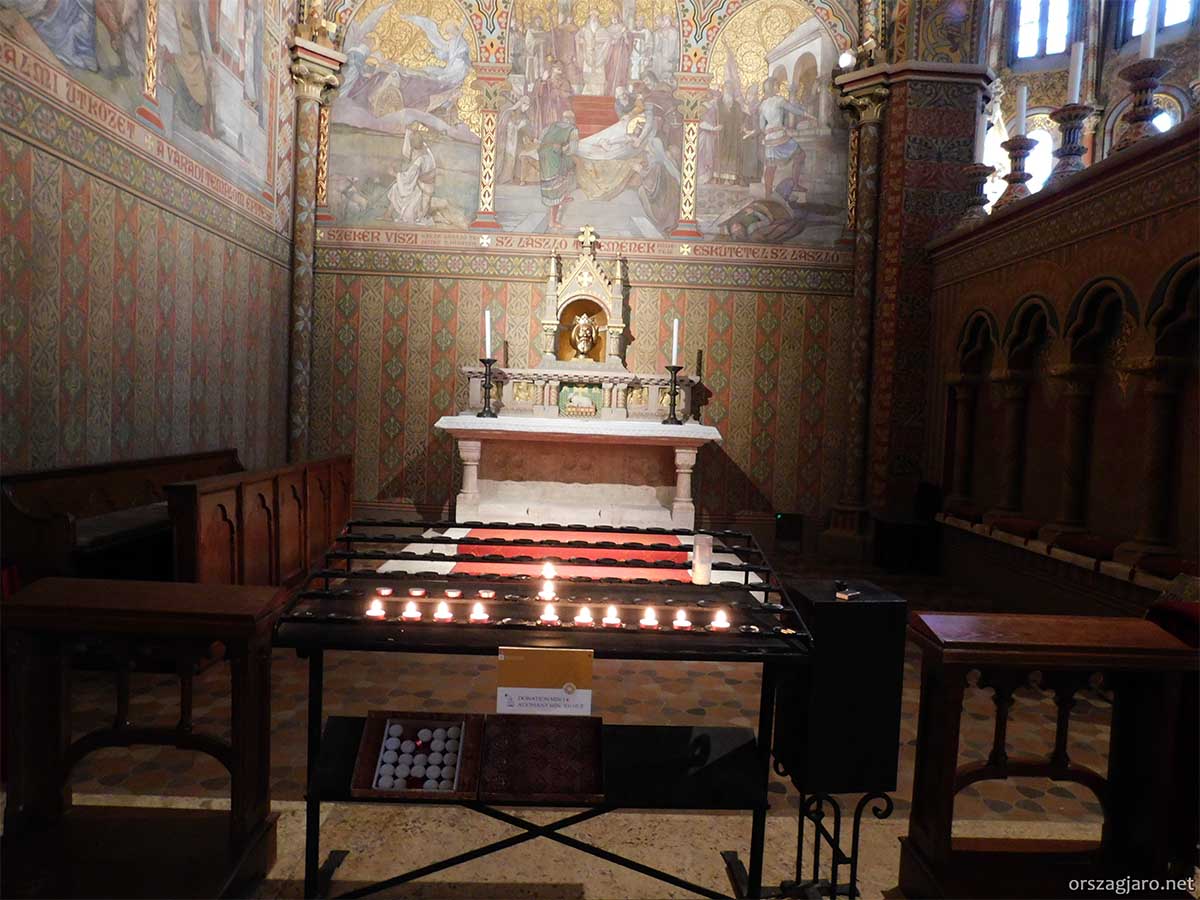
Above the altar are portraits of Saint Ladislaus, Pope Celestine III, and King Béla III, who played a role in his canonization.
Trinity Chapel
The altar of the chapel depicts the Holy Trinity in a special iconographic form known as the “Throne of Grace.” God the Father, seated on a throne, presents the crucified Christ to the world, while the dove of the Holy Spirit hovers above them.
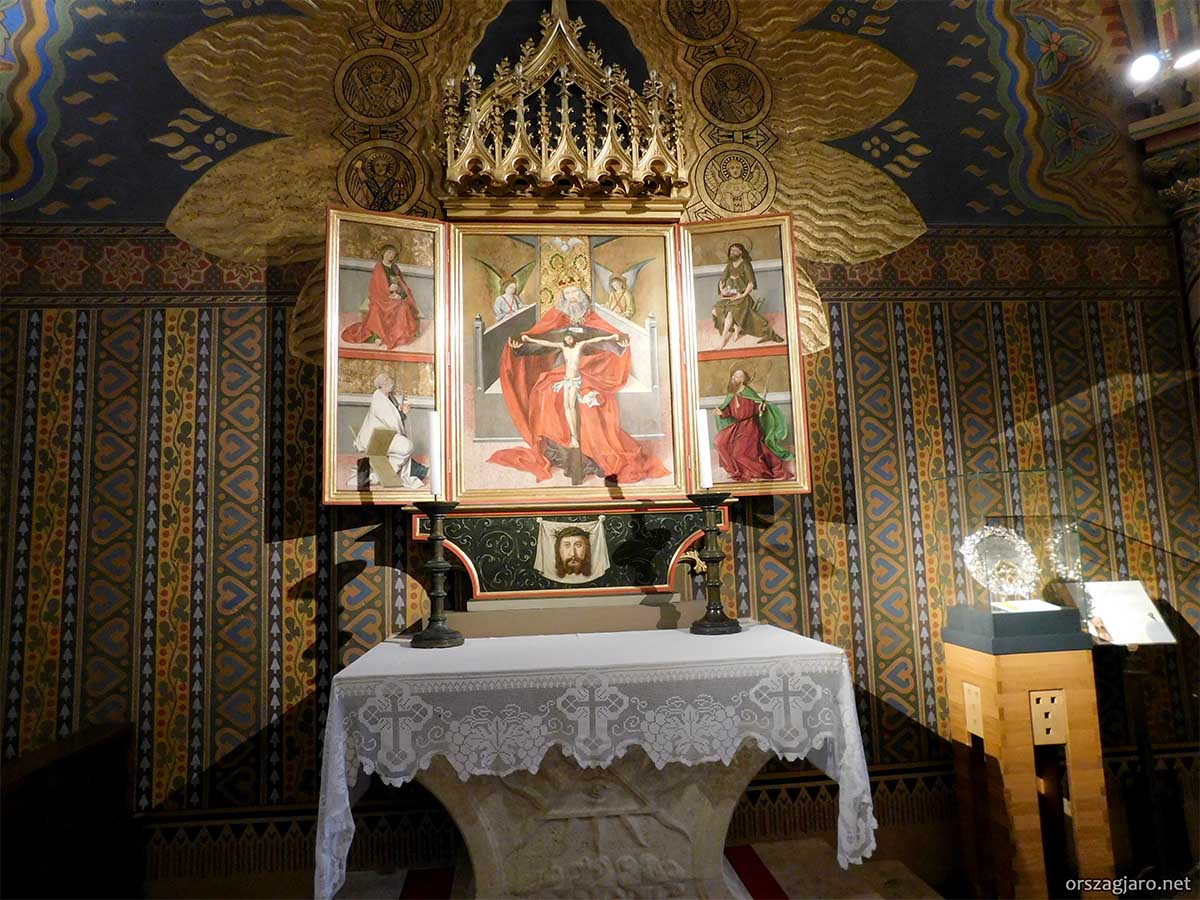
On the wings of the altar are figures of Saint John the Evangelist, Saint John the Baptist, Saint Peter, and Saint Paul.
Chapel of Saint Emeric
The Chapel of Saint Emeric, established through the donation of Ferenc Zichy, features a winged altar with statues of King Saint Stephen, Prince Saint Emeric, and Saint Gerard of Csanád.
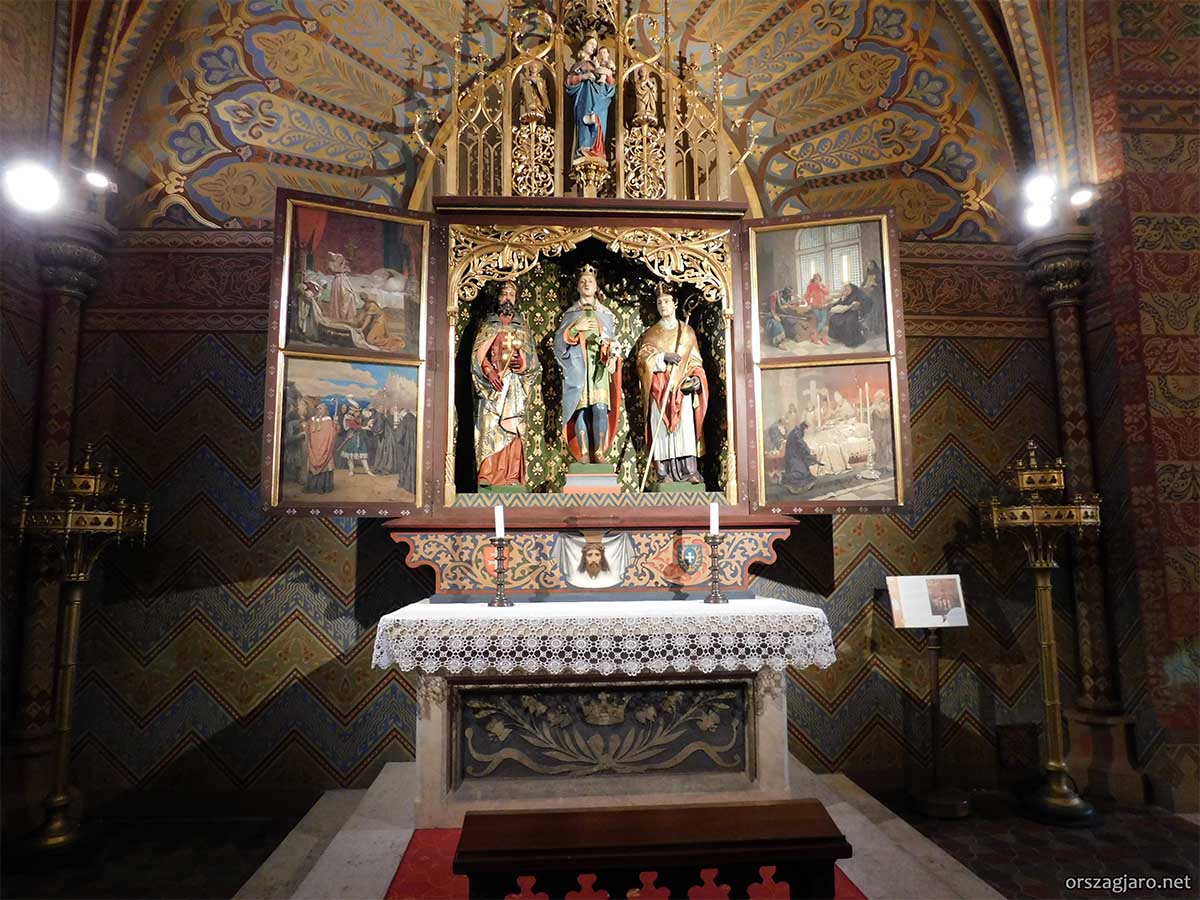
The paintings depicting the life of Prince Emeric were created by Mihály Zichy.
Matthias Tower
Az épület nyugati homlokzatának legmeghatározóbb eleme a déli harangtorony, melyet gótika stílusában alakított ki Hunyadi Mátyás, 1470-re fejeztette be A Mátyás-torony motívumkincsét a XV. századi klasszikus gótika formái határozzák meg. A torony teljes magassága 78,16 méter,The most dominant element of the western façade is the southern bell tower, completed in 1470 in Gothic style under King Matthias. The decorative motifs of the Matthias Tower reflect the forms of 15th-century High Gothic architecture. The tower reaches a total height of 78.16 meters.
Matthias Church can be visited by tourists with a valid admission ticket.
Address:
2 Szentháromság Square, Budapest, Hungary